
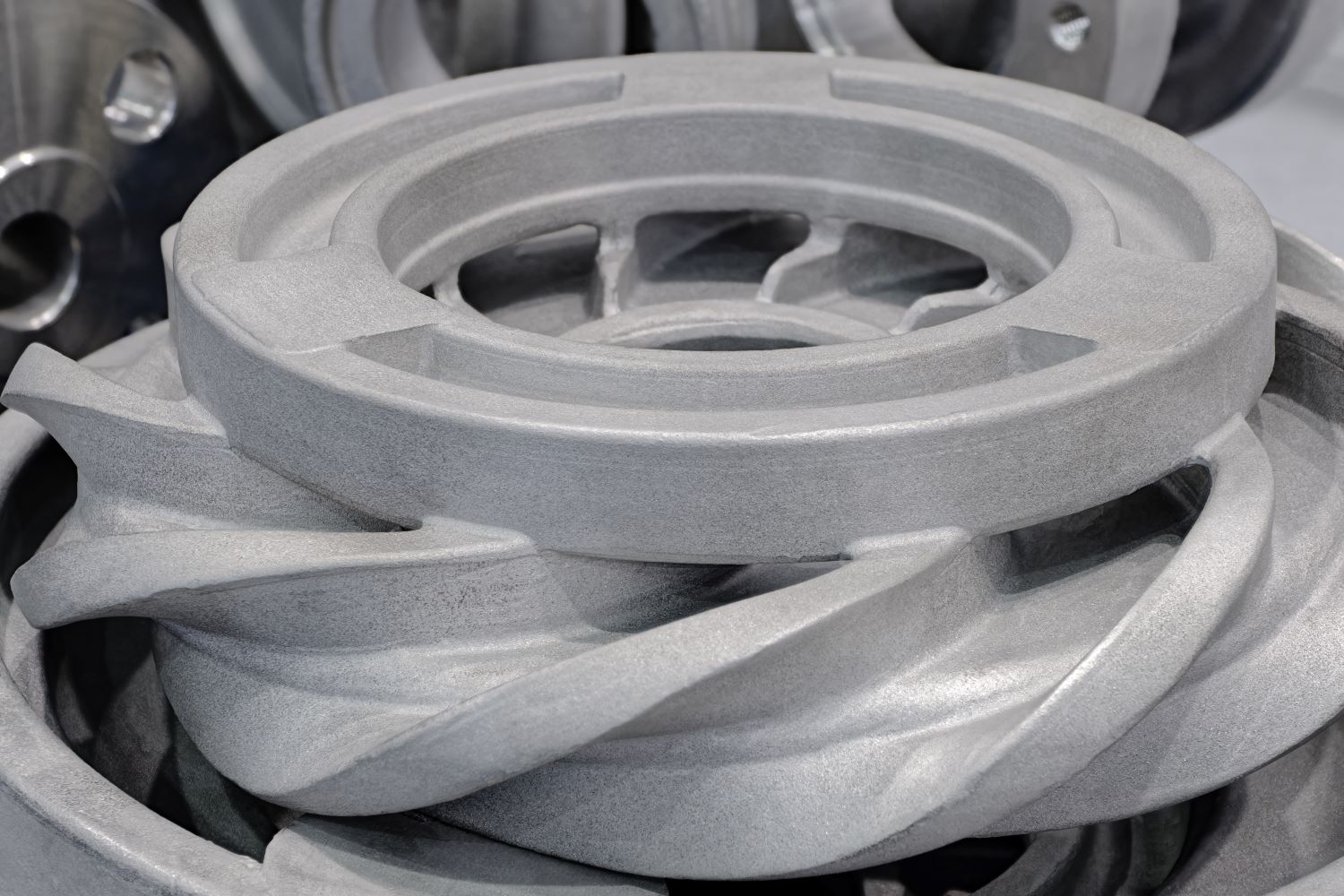
Vietnam high pressure die casting has become a go-to option for global manufacturers looking for cost-effective, technically capable production in Southeast Asia. In this guide we walk through the industry landscape, the manufacturing advantages Vietnam offers, the core processes and materials used in high pressure die casting, and the quality and supplier-evaluation criteria you should apply when sourcing parts. Whether you’re designing automotive housings, consumer electronics frames, or industrial components, we’ll help you understand why Vietnam is an increasingly strategic choice, and how to select the right partner for reliable, scalable production.
Overview Of Vietnam’s High Pressure Die Casting Industry
Vietnam’s high pressure die casting sector has grown rapidly over the last decade as foreign investment, improved infrastructure, and targeted industrial policy attracted OEMs and tier suppliers. We see two parallel trends driving this growth: migration of production from higher-cost countries (especially for mid-volume runs) and expansion of local companies moving up the value chain to serve automotive, consumer electronics, and power tool markets.
Facilities in Vietnam now frequently offer full-service capabilities, tooling design, die manufacturing, high pressure machines ranging from small to large-tonnage presses, CNC machining, heat treatment, and secondary finishing. That integration reduces logistical complexity and often shortens time-to-market. For buyers, the combination of competitive labor cost and improving technical competence makes Vietnam an attractive alternative to more established die-casting hubs.
We should note that while Vietnam is mature in many respects, capabilities vary by vendor. Some specialize in aluminum structural components for EVs: others focus on zinc and magnesium parts for electronics and appliances. We recommend mapping supplier specialization to your product’s technical needs early in the sourcing process.
Market Landscape And Economic Drivers
Vietnam’s macro environment supports export-oriented die casting: a young workforce, favorable trade agreements, improving logistics, and incentives for industrial parks. The government has emphasized attracting manufacturing FDI and upgrading vocational training, which translates into a larger pool of skilled technicians and engineers available to die casting firms.
We also see domestic demand rising. Local OEMs in two-wheeler manufacturing, white goods, and an emerging EV ecosystem are expanding, creating a stable base demand beyond exports.
Key Export Markets And End Industries
Major export destinations for die-cast parts from Vietnam include ASEAN neighbors, Europe, North America, and increasingly partners in East Asia. End industries with the highest demand are:
- Automotive and EV components (structural housings, gearbox parts, motor housings)
- Consumer electronics (frames, heat sinks)
- Power tools and machinery
- Household appliances (compressor parts, brackets)
Each sector has different tolerances, surface-finish expectations, and certification needs. Automotive, for example, demands tighter dimensional control and rigorous traceability.
Major Regions And Clusters In Vietnam
Industrial activity concentrates in the north (around Hanoi and Hai Phong), the central region (Da Nang corridor), and the south (Ho Chi Minh City, Binh Duong, Dong Nai). Northern clusters tend to have stronger heavy-industrial capabilities, including larger foundries, while southern clusters excel in assembly and electronics-adjacent die casting. Proximity to ports and international airports is a common selection factor for export-oriented suppliers.
Competitive Advantages Of Manufacturing In Vietnam
Vietnam’s competitiveness for high pressure die casting stems from a mix of cost, geography, and improving technical capacity. The country is not trying to be the cheapest option at any cost: instead, it positions as a reliable mid-cost, high-value alternative with strong export connectivity.
Cost Structure And Labor Dynamics
Labor costs in Vietnam remain lower than in China’s coastal provinces and many western markets, but wages have been rising, prompting manufacturers to invest in automation and process improvements. We often recommend balancing labor-dependent operations (like simple finishing) with automated processes (die-cast cell automation, CNC machining) to preserve margins while improving quality consistency.
Skilled labor, mold makers, die technicians, and metallurgists, is increasingly available thanks to vocational programs and on-the-job training provided by larger suppliers. That said, we advise buyers to audit workforce skill levels during supplier qualification, as capability can differ significantly across workshops.
Logistics, Proximity To Supply Chains, And Trade Agreements
Vietnam benefits from numerous free trade agreements (EVFTA, CPTPP, RCEP) that can lower tariff barriers for exported die-cast components, improving landed cost into key markets. Geographically, Vietnam is well positioned within Asia’s electronics and automotive supply chains, enabling shorter transit times to major assembly hubs in Southeast and East Asia.
We recommend factoring port access, export handling capacity, and inland transport reliability into supplier selection, delays or unreliable freight can erode cost advantages quickly.
High Pressure Die Casting Processes And Technologies
Understanding the core process and technology is essential when evaluating manufacturers.
High pressure die casting forces molten metal into a steel mold under high velocity and pressure, producing complex shapes with thin walls and good dimensional repeatability. The method favours high-volume runs due to tooling cost but can be economical for medium volumes when tooling is optimized.
Common Alloys And Material Selection (Aluminum, Zinc, Magnesium)
- Aluminum alloys (A356, A380 variants) are widely used for structural, heat-dissipating, and load-bearing components. They offer good strength-to-weight ratio and corrosion resistance.
- Zinc alloys provide excellent surface finish, tighter tolerances, and are cost-effective for small, detailed parts, common in consumer goods and connectors.
- Magnesium alloys are valued where extreme light-weighting is required (some automotive and aerospace-adjacent parts), though they need special handling due to higher reactivity.
Alloy choice impacts tooling life, shrinkage allowances, thermal treatment needs, and post-casting machining. We advise early material selection aligned with downstream requirements, coating, heat treatment, and mechanical properties.
Tooling, Dies, And Mold Design Considerations
Tooling quality often determines part consistency. Important considerations include:
- Die material and hardening treatment for longevity
- Cooling channel design to control solidification and reduce porosity
- Venting and gating strategy to avoid cold shuts and gas entrapment
- Allowances for shrinkage and machining
We recommend involving experienced die designers early, and if possible, validating die designs with simulation (e.g., flow and solidification models) before committing to expensive tooling.
Quality Assurance, Standards, And Testing Protocols
Quality expectations in die casting vary by sector, but consistent processes and transparency are non-negotiable. We evaluate suppliers based on their documented quality systems, traceability, and testing capabilities.
Relevant Certifications And Industry Standards (ISO, IATF, RoHS)
Key certifications buyers should look for include:
- ISO 9001: Quality management system baseline
- IATF 16949: Automotive quality management, essential for tier suppliers in automotive
- ISO 14001: Environmental management, useful where regulatory compliance is critical
- RoHS and REACH compliance for electronics and EU-bound goods
Suppliers with these certifications typically demonstrate mature process control, but audits remain essential to verify implementation.
Inspection Methods And Non-Destructive Testing
Common inspection and testing methods used in the industry include:
- Coordinate Measuring Machines (CMM) for dimensional validation
- X-ray (CT) inspection for internal porosity and cold shuts
- Dye penetrant and magnetic particle inspection for surface cracks
- Hardness testing, tensile testing, and metallographic analysis for mechanical properties and microstructure
We often recommend a mixed strategy: statistical process control for ongoing runs, combined with batch-level NDT sampling, to balance cost and assurance. Also, insist on material certificates and full traceability from melt batch to finished part.
How To Evaluate And Select A Die Casting Supplier In Vietnam
Selecting the right partner requires a methodical approach that balances technical capability, cost, and long-term reliability.
Qualification Checklist: Capabilities, Capacity, And Certifications
Our checklist includes:
- Technical capabilities: alloy experience, press tonnage range, CNC and finishing capabilities
- Tooling competence: in-house toolmaking or reliable tooling partners
- Quality systems: ISO/IATF certifications, documented process controls, traceability
- Testing capability: in-house CMM, X-ray, lab for mechanical testing
- Capacity and scale: ability to meet projected volumes with contingency
- Financial and operational stability: to avoid supply disruptions
We recommend visiting critical suppliers, doing sample audits, and requesting process flow diagrams and capability matrices.
Cost, Lead Time, And Total Cost Of Ownership Considerations
Price is important, but it shouldn’t be the sole criterion. We evaluate total cost of ownership (TCO), which includes:
- Unit price and tooling amortization
- Scrap and rework rates
- Logistics and inventory carrying costs
- Communication overhead and supplier management time
- Warranty and after-sales support costs
Lead time variability can be a hidden cost, long or unreliable lead times increase inventory and risk. We advise qualifying secondary suppliers and building realistic lead-time buffers into production plans.
Negotiating terms that tie performance to incentives, such as quality bonuses or lead-time penalties, can align supplier behavior with long-term reliability.
Conclusion
Vietnam high pressure die casting now offers a compelling blend of cost, proximity to Asian supply chains, and growing technical competence. For companies seeking mid- to high-volume die-cast parts, especially in automotive, electronics, and appliances, Vietnam can be a strategic addition to a diversified sourcing strategy.
We recommend approaching Vietnamese suppliers with a structured qualification process, emphasizing tooling quality, certifications, and inspection capabilities. When we combine rigorous supplier selection with clear TCO analysis and contingency planning, Vietnam frequently delivers reliable parts at competitive landed costs, without sacrificing the quality standards global markets demand.